Part 1
How does the dual CEO model work? This is a new development for PPF, but more companies around the world are starting to use it.
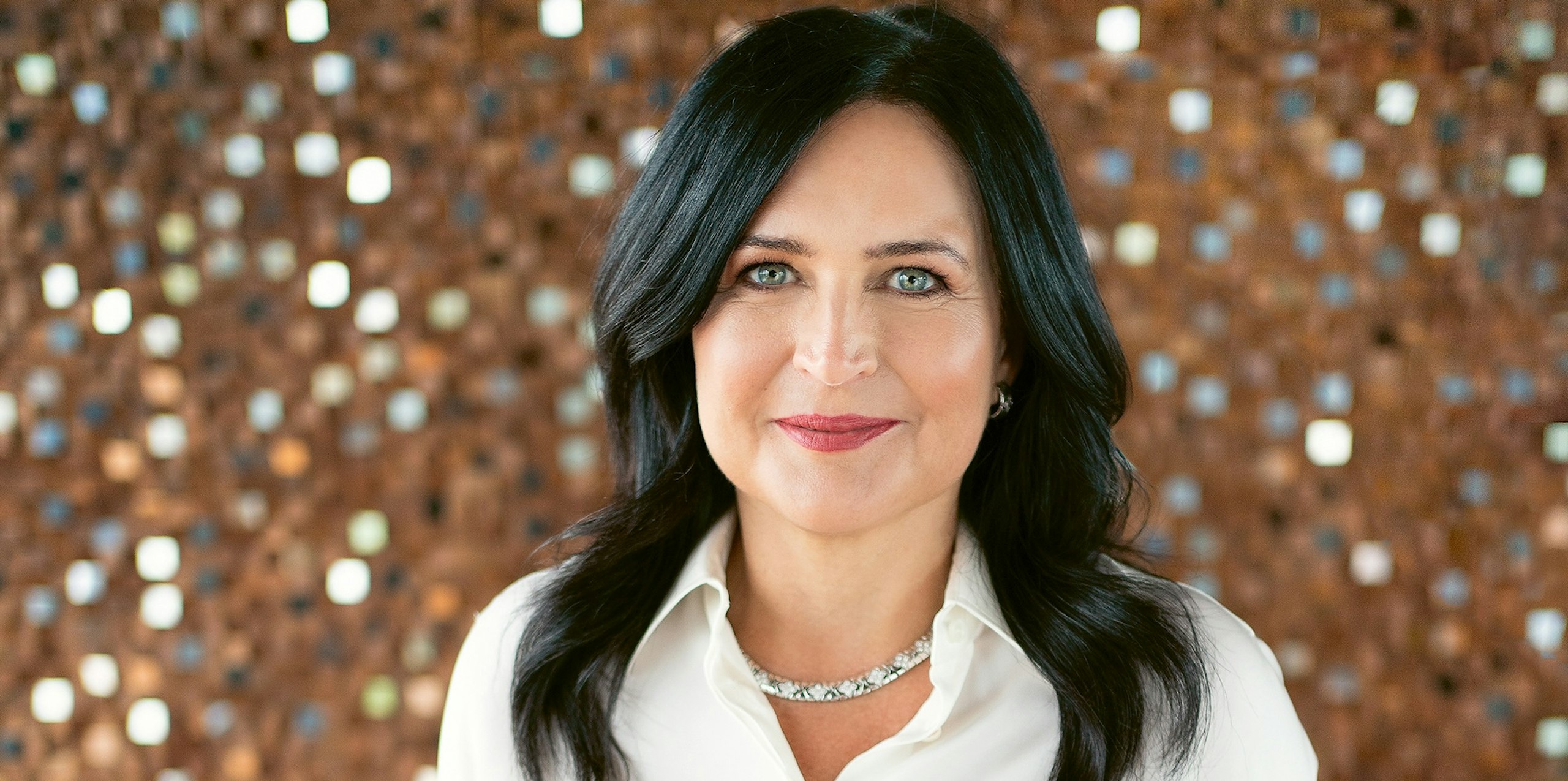
Kateřina Jirásková: Didier and I have known each other for more than seven years and have been working very closely together for the last few years. Historically, we had separate roles, which we still maintain, so we know how to work together. We have been performing this function together since July, and I would say that we complement each other. We have managed to complete the consolidation of PPF's ownership, complete the ProSieben project and make a few investments in real estate, so I would say that it has been excellent.
Didier Stoessel: I speak English, Katka speaks Czech, so we complement each other well. We really cover a wide spectrum. PPF is a large organisation operating in 25 countries around the world, employing 65,000 people who work on new products every day. In such an organisation, it is an advantage to have two leaders. We often joke that when one speaks, the other smiles, and vice versa.
The PPF Group is controlled by the Amalar family holding company, with Renáta Kellnerová as the majority owner. What does this mean for the group's operations compared to the past?
KJ: We have undergone a fairly fundamental transformation over the last five years. We had to deal with the departure of our founder and the impact of COVID-19, which affected many of our businesses. We faced a geopolitical situation, mainly the war in Ukraine. We decided to leave Russia, which was not an easy decision, but we followed through on it completely. Today, we are growing and resilient. And what is PPF like? It is a family-owned company, and here I would use the English term “patient capital”. It sounds a bit strange, but it is accurate. PPF is an investor with a long-term horizon.
If we wanted a business definition, it would be a European, sector-focused investment holding company with a clear management structure, owned solely by the Kellner family. The shareholders are now actively involved in the strategic management of the group, which is also a change from the past.
DS: I would add that we are now a very stable organisation. We have significant sector-specific know-how in a number of areas. I worked in the City of London for twenty years, so I can compare us with other investment groups, and it is clear that we are unique in many ways. A few days ago, I looked at our reputation on international markets, and we are truly a blue chip. We are perceived as stable capital with a long-term horizon and, at the same time, as a highly professional player in the sectors in which we operate. There are few such groups.
By comparison, private equity funds generally operate in cycles of five to seven years, use high leverage, and are more financiers than operators. We are primarily operators.
From the perspective of digital transformation and in connection with the impact of artificial intelligence on our business, whether in media, telecommunications or other industries, we are truly at the forefront of this transformation, which we are actively trying to shape. This is made possible by the fact that we are owned by a family-owned company. Stability brings innovation.
What are the key pillars of PPF today?
KJ: Today, they are telecommunications, media, financial services and real estate. In addition to these four basic pillars, we also have other significant business areas, including e-commerce, primarily logistics, and selected areas of industry and mobility. These are mostly areas where we have know-how, can leverage various synergies and see growth potential for the coming decades.
DS: Another thing that sets us apart is our effort to connect and collaborate across our verticals. In other groups, telecommunications and media don't usually communicate with each other. At our company, they are fully integrated. We leverage the advantages of one area to support another. That's why we are able to set trends, whether it's OnePlay or Unity. Digital transformation is a driving force for innovation, profitability and the creation of new businesses. Because we operate in customer-focused sectors, we are able to recognise it earlier and manage it better.
Are you considering expanding these pillars and adding new ones?
KJ: We always say: never say never. However, we are currently satisfied with our pillars.
PPF openly talks about wanting to be part of deglobalisation. How specifically do you want to take advantage of current events in the world?
KJ: In recent years, PPF has been trying to build its presence in markets that are much more predictable than they have been historically. The core of our business is in regulated areas, and three of the four pillars mentioned are regulated in some way – whether it be telecommunications, financial services or media. They are therefore less cyclical and not fundamentally dependent on geopolitical developments. That is our defence, or rather our focus in the current situation.
DS: In today's investment world, it is important to have expertise in a given sector, economies of scale, platforms and the ability to share ideas across companies. However, the geopolitical situation is also an important factor that we take into account when making investment decisions. We have a strong presence in Europe and have exited a number of Asian markets, most recently announcing sales within Home Credit. Europe is the region where we are currently focusing our investments, and we are very optimistic about its future.
KJ: We have left Russia, we have left China, and we have left many Asian countries, and our main focus is on Europe and, to some extent, the United States.
Taxes in the Czech Republic
What about the possible relocation of PPF's parent company from the Netherlands to the Czech Republic?
KJ: PPF has always had a relatively significant part of its management here in the Czech Republic, but its headquarters were in the Netherlands. In the early days of our expansion, the level of protection for foreign investments in the Dutch jurisdiction was much stronger than here in the Czech Republic. This difference has disappeared, and yes, there is nothing stopping us from moving our headquarters home. I can confirm that the move is being discussed at the shareholder level and we will initiate it in the coming days. We are in the final stages of preparing this process. Ideally, we would like to complete it during the first half of 2026.
What are the other advantages of this move?
KJ: I think the most important advantage is that, since our shareholders live here, it is completely natural for them to have the entire structure of the companies they own here in the Czech Republic.
And what are the implications for the Czech Republic?
KJ: If PPF Group moves to Czechia, it will pay taxes in Czechia at the group level.
New businesses
Let's take a look at your pillars one by one. One of the biggest deals in PPF's history was the recent sale of a narrow majority in the telecommunications business to the Emirates Telecommunication Group, operating under the e& brand, for more than CZK 50 billion. How is this cooperation developing?
DS: As you know, we are the largest operator in the Czech Republic, and O2 certainly needs no introduction. They are constantly innovating, whether in terms of network quality or what we have recently created in cooperation between Nova and O2 under the Oneplay brand. This is proof of how strong our position is in this sector.
This is our first year of joint venture with e&, and it is doing very well. We manage it together, but we are responsible for its day-to-day operations. I think they were very surprised at how strong the results are. We are delivering on everything we promised. This, of course, strengthens trust.
We are continuing to grow. A few months ago, we announced the acquisition of SBB in Serbia for EUR 820 million. That was no small deal. Our goal was to create a convergent operator in Serbia, i.e. one that offers mobile services, internet connectivity, television or video content, IT services and even cybersecurity. We have lots of plans, because two large groups are merging, and we also have a lot to learn from them. I think you will see more new projects in the coming months. We know this area very well; digitalisation is key in this field, and we feel confident here.
So will the new acquisition be similar to the one in Serbia? Where?
DS: You know I can't tell you more, but you'll find out soon. We are planning to expand primarily in countries where we already operate. This is so that we can strengthen the connectivity aspect of our business.
Does your partner from the United Arab Emirates, e&, have the option to buy your remaining stake in the future?
DS: The first anniversary of this joint venture was in October, about a month and a half ago. At the time of the acquisition, it was already stated that the partnership would be reviewed after five years. We discussed this in advance. We'll see how it develops, but so far our cooperation is working great.
Does that mean there is an option mechanism whereby one of the partners can ask for the other's share?
DS: Yes, in such cases, time frames and conditions are always set through option agreements.
The aforementioned companies O2 and the Czech Cetin are owned by PPF outside of this partnership. Does that mean they are strategic for you and not for sale?
DS: Of course not. This is evident from my enthusiasm for O2, and of course I should also mention Cetin, which is the infrastructure that allows us to make calls and connect to high-speed internet. This is an extremely strategic segment for us. We view such businesses as long-term investments. We strive to develop them and expand their activities. Thanks to our good overview of trends, we believe that new directions will emerge in telecommunications, which we will develop based on O2.
Part 2
Škoda Plzeň is set to bid farewell to its winged arrow, PPF bosses confirm
The largest financial group, PPF, is growing. The value of its assets in the first half of this year increased by EUR 1.7 billion to more than EUR 43 billion, exceeding CZK 1 trillion. The group, owned by Renáta Kellnerová and her daughters, posted a profit of CZK 8.5 billion, with its telecommunications division traditionally contributing the most.
However, it is closely followed by other profitable parts of the group, such as media, finance, real estate and others, which we discussed in the second part of the interview with the two top executives of PPF, Kateřina Jirásková and Didier Stoessel. They took over the management of the group in a shared role as CEOs in the middle of this year.
PPF's rapidly growing business includes finance, led by the Air Bank group and PPF Bank, and the value of the group's nearly 30% stake in Moneta Bank, held through Tanemo, has also grown significantly.
Air Bank
PPF has a leading position in most of the sectors in which it operates, but this is not the case in the financial sector. The Czech Republic is dominated by the three largest banks, Česká spořitelna, ČSOB and Komerční banka, which are controlled by foreign banking groups.
However, Kateřina Jirásková disagrees that PPF's financial section, which includes the Air Bank group, loan providers Zonky and Home Credit, PPF Bank and a stake in Moneta, is lagging behind in any way.
"Air Bank was the fastest growing bank last year and will most likely be again this year in terms of the number of new clients. Why? Because we have a loyalty programme between O2 and Air Bank that offers benefits to clients of both companies. We may not be the largest, but we are the fastest growing," added Didier Stoessel.
The first part of the interview with the heads of PPF
"When we meet with the directors of large banks, they always look at us with a certain amount of envy. They see what we are doing between telecommunications and banking, and they cannot do that because they do not have both of these assets. Our ambition for rapid growth is clear," added Didier Stoessel.
Although PPF is betting on greater vertical integration within the group for Air Bank's growth, it was planning a merger with Moneta a few years ago, which would have created the third-largest bank in the Czech Republic in terms of client numbers. However, it abandoned this plan in May 2022 due to unfavourable macroeconomic developments.
PPF remained the largest shareholder in Moneta, and the vision of a merger with Air Bank may not be a thing of the past. When asked whether PPF was no longer considering a merger with Moneta, Jirásková responded: "We always consider all options, and anything can come back into play."
However, compared to previous years, the merger would be much more expensive for PPF. Since the merger plans were abandoned, Moneta's market value has roughly doubled to CZK 96 billion.
Oneplay bigger than Netflix
The PPF Group also has big plans for its media division, which is dominated in the Czech Republic by Nova and Oneplay. The platform, which was created this spring by merging Voyo and O2 TV, also relies on its own content and, after less than a year of operation, has significantly surpassed the figures of the original Voyo. At the end of 2024, it had 950,000 users in Czechia and Slovakia.
"When I took over CME (PPF's media holding company) years ago, my goal was to get a million subscribers. After we merged Voyo Czechia with O2 TV, an even bigger platform was created, and I can say that in Czechia, the number of subscribers is between one and two million, closer to two million. If you look around the world, the Czech Republic is one of the few countries where a national company has managed to beat Netflix," says Didier Stoessel.
Although some programmes are now primarily offered only on Oneplay, the two Czech brands are not competitors. "It's a slightly different model, and for us it's not a competition between brands. One is a streaming platform like Netflix, the other is a television brand. We're not worried that one brand will overshadow the other," adds Stoessel.
In the interview, the CEOs also return to the negative reactions that accompanied the launch of Oneplay, as well as the situation in Slovakia, where Markíza TV, part of the CME group, faced criticism from some editors that the TV management was interfering with editorial work.
"CME and the individual stations have their own management, and it has been clearly stated that PPF will not interfere in their management. We have introduced qualitative and quantitative measurement methods, which are monitored daily by local management with the aim of providing balanced and objective news coverage. This is also overseen by an editorial board, which includes three experienced journalists from Austria, the US and Germany," said Stoessel, adding: "Yes, we have been criticised, but in my opinion it was not justified."
Regarding the negative reactions to this year's launch of Oneplay, Stoessel said that the company apologised to its customers for the initial problems. "When migrating a million customers, this can happen in the first few days, and that's what happened to us. But everything was resolved within a few days," he said.
Departure from ProSiebenSat.1 and plans with Viaplay
In the media sphere, PPF also had plans with the German television station ProSiebenSat.1, but the group ended this venture this year after disagreeing with another major shareholder, the Italian company MFE, owned by the Berlusconi family.
"When we entered, Mr Berlusconi already owned 29.9 per cent. We started with ten per cent and gradually increased our stake. Our goal was to do something similar with ProSieben as we did here. To strengthen local content, carry out digital transformation as quickly as possible and create the equivalent of Voy. However, the second shareholder had a different, more European perspective," Stoessel explains in an interview.
"When we realised that we had different ideas about the future of the company, they (the Italians, ed.) first tried to buy a larger stake at a low price. We responded with a public counteroffer, but in the end, they came up with an offer that we felt was fair given the company's future prospects. We sold our stake, collected the profit, and decided to leave. If it is not possible to implement your own strategy, there is no point in staying with the company," explains Stoessel.
This approach is applied across the entire group. There must be agreement with partners on the long-term strategy. "If there isn't, then either you take complete control of the company, at the right price, of course, or you leave. We are very disciplined in this regard," adds Stoessel.
On the other hand, cooperation is developing well in the Scandinavian streaming platform Viaplay, in which PPF has the same stake as France's Canal+ and together they control the company.
"Viaplay has five million subscribers and is one of the largest in Scandinavia and the Netherlands, where it has the rights to Formula 1, for example, and thanks to Max Verstappen, it is a very popular sport. This collaboration is the opposite of what I described a moment ago. When you have a partner with whom you get along great, there is no reason to change anything," says Stoessel.
Reality, departure from Russia and partnership with Strnad
PPF's real estate business has been negatively affected in recent years by its departure from Russia.
"Before the war in Ukraine began, PPF had more than two-thirds of its real estate portfolio in Russia, which we sold off and, from my point of view, actually disappeared. Now we are trying to bring this pillar down to a reasonable size, say around ten per cent of PPF's portfolio," said Jirásková.
This includes recent purchases of Hilton, Four Seasons and Diplomat hotels in the Czech Republic, but most of the group's real estate investments have been made abroad. "More than two-thirds of real estate investments are in the US, Poland, Romania, the Netherlands, Germany and the UK. Geographical diversification will be part of our strategy, but the mix of individual countries may change as opportunities arise," added Jirásková.
PPF is embarking on residential projects in the US, but according to Jirásková, they are not considering this in the Czech Republic at this time.
The purchase of hotels in the Czech Republic also led to a new partnership in the form of the purchase of the Four Seasons hotel together with arms manufacturer Michal Strnad. "In general, the philosophy of partnership is one of our pillars. And here we have a partnership with Mr Strnad, that's the state of affairs. I don't think there's any need to develop this beyond the scope of this philosophy," said Jirásková.
In connection with this real estate partnership, however, the question arises as to whether it could develop in a different direction. Michal Strnad's CSG Group is seeking to capitalise on strong demand for armaments in connection with the war in Ukraine and increased military spending by NATO member countries, and plans to list its shares on the Amsterdam stock exchange next year. According to Bloomberg, the company is targeting a valuation of up to €30 billion.
When asked whether PPF Group would participate in the CSG share subscription, Jirásková replied: "This is not a form of investment that we normally engage in. But when opportunities arise that are relatively exceptional, which Michal Strnad's IPO undoubtedly is, we will definitely look into it."
Škoda without the winged arrow
PPF's investment in the traditional engineering company Škoda Plzeň, which the group took control of in 2017, is also beginning to pay off.
"Five years ago, we were going through a difficult period – a pandemic, closed factories, a sharp rise in material prices and fines we faced for missed deadlines. It was not an easy situation, and then the war in Ukraine broke out. And today? Look at the markets we have entered, the orders we have from private companies. We are profitable," says Didier Stoessel of Škoda in Pilsen.
However, in 2029, the Pilsen-based company will no longer be able to use the Škoda name and winged arrow logo. Three years ago, the Škoda Group sold both to its namesake in Mladá Boleslav, Škoda Auto. Škoda Pilsen will thus get a new logo and a new name – and the search process has already begun. “We are already working on it, but the final decision is still years away, of course,” says Jirásková.
"We will proceed in the same way as with other companies. For example, our telecommunications companies outside Czechia are called Yettel. We bought them from the Norwegian group Telenor, they bore its name for several years, and then we created a completely new brand. No one remembers Telenor anymore. We will do the same here. Yes, Škoda will of course always be known for its history and long existence, but we are planning to rebrand it as a new company," adds Stoessel.
Partners for Sotio and the search for a cure for cancer
The PPF Group also includes its biotechnology division, Sotio, which has been engaged in the research and development of innovative anti-cancer drugs for 15 years. However, this division is not financially successful and has been generating significant losses for a long time. In 2022 and 2023 alone, the cumulative loss exceeded five billion Czech crowns.
“Sotio has been part of PPF for many years, it is important to us and we are proud of what we have achieved there. You work on developing new molecules, progressing through individual phases, sometimes successfully and sometimes not. And each phase means further investment. Getting a molecule from its design to patients on a large scale so that it really helps is very challenging. Unfortunately, cancer is a major challenge of our time," said Stoessel.
The group is therefore changing its approach in this area as well. "Just as we are building partnerships in other areas, we are more open to discussions with partners in this area than we have been historically," added Jirásková.
And how does Jirásková view the losses generated? "I would say that in the context of PPF's overall situation, which permeates our entire discussion, these are not significant figures."